Why Your Skin Stings After Training in Cold Air
Quick Answer: Cold air holds almost no moisture, so exercising in it strips water from the skin surface fast - and combined with sweat, wind, and the temperature swing between outdoors and a heated building, it produces genuine barrier disruption. The stinging is the barrier signalling, not a burn. Occlusive protection before, lukewarm rinsing after, and a ceramide moisturiser within minutes covers almost all of it.
The most common mistake is treating it like sunburn with a cooling gel - alcohol-based products on a disrupted barrier make it considerably worse.
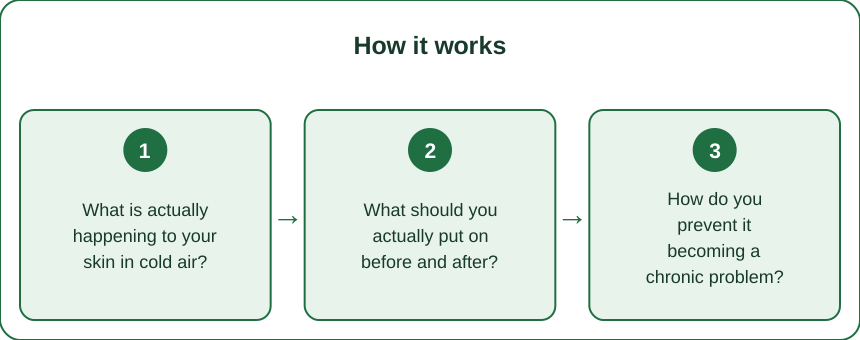
What is actually happening to your skin in cold air?
Rapid moisture loss and a physical stress response, not a burn.
The humidity problem. Cold air holds far less water vapour than warm air. Air at 5C holds roughly a quarter of the moisture that air at 25C can. Skin loses water to that dry air continuously, and moving through it while exercising accelerates the exchange.
Wind, which multiplies everything. Air movement across the skin dramatically increases evaporative loss. Running at 10km/h into a 15km/h headwind means air moving across your face at 25km/h for the whole session.
What sweat contributes:
- Sweat evaporating in cold dry air cools the skin sharply
- Salt left behind is mildly irritating and hygroscopic - it draws further moisture out
- Sweat between skin and clothing causes friction in a barrier that is already stressed
The temperature swing, which is the part people miss. Going from -2C outdoors into a 22C heated building is a 24C swing in seconds. Blood vessels dilate rapidly, and that rapid vasodilation is what produces the intense stinging and burning sensation on the face and hands. It is not damage in itself, but it happens on top of a barrier that is already compromised.
What the stinging means. It indicates barrier disruption - nerve endings responding to an environment they are normally protected from. The same sensation on intact skin would not happen.
How it progresses if repeated:
- Day 1: transient stinging and redness after coming inside
- Days 2 to 5: persistent tightness and roughness
- Week 2 onwards: flaking, sensitivity to products, and possibly small cracks at the corners of the mouth and nose
- Chronic: increased general sensitivity that persists into other seasons
On genuine windburn. What is popularly called windburn is largely barrier disruption plus vasodilation, though at very cold temperatures with high wind there is real tissue risk. Numbness, waxy white or gray patches, or hard skin means potential frostbite and needs prompt medical attention - that is a different problem entirely, and this is general information rather than medical advice.
What should you actually put on before and after?
Occlusive before, gentle rinse and ceramides after, and nothing with alcohol at any point.
Before exercise:
- An occlusive barrier on exposed skin. Petrolatum-based products are the most effective at reducing water loss - a thin layer on cheeks, nose, and chin
- Balms rather than lotions. A water-based lotion evaporates and can leave skin colder and drier
- Sunscreen still applies. UV exposure does not stop in autumn, and snow or bright cloud increases reflection. A mineral sunscreen in a cream base doubles as partial barrier protection
- Lip balm with occlusive ingredients, since lips have almost no barrier of their own and suffer first
- Apply 10 to 15 minutes before going out, so it has settled
During:
- Cover what you can. A buff or neck gaiter over the lower face is more effective than any product and also warms the air you breathe
- Avoid wiping your face with a sleeve or glove. Mechanical friction on cold, stressed skin is a significant contributor and it happens without thinking
After, and the timing matters:
- Let your face return to room temperature before washing. Warm water on very cold skin intensifies the stinging and the vasodilation
- Lukewarm water, never hot. Hot water strips lipids from an already depleted barrier
- A cream or oil cleanser, or simply rinse with water if you did not wear makeup. Foaming cleansers after cold exercise are too harsh
- Moisturise within three minutes of patting dry, while the skin is still slightly damp. This window genuinely matters for how much water is retained
- A ceramide-containing moisturiser, ideally with cholesterol and fatty acids
What to avoid entirely:
- Alcohol-based toners or cooling gels. These sting because they are stripping further
- Exfoliating acids on the same day as cold outdoor exercise
- Retinoids on cold-exposure days, at least until the barrier is stable
- Anything menthol-based, which feels soothing and increases irritation
On the redness that persists. Some flushing for 20 to 30 minutes after coming inside is normal. Redness lasting hours, or visible broken capillaries developing, suggests you need more protection - and for anyone with rosacea, cold-to-warm transitions are a well-known trigger worth managing deliberately.

How do you prevent it becoming a chronic problem?
Build barrier resilience between sessions, because the exposure itself is not going away.
The between-sessions routine, which matters more than the post-workout one:
- Simplify. A gentle cleanser, a ceramide moisturiser, and sunscreen is the whole requirement while a barrier is recovering
- Pause actives for two weeks if skin is stinging - retinoids, acids, vitamin C. Reintroduce one at a time
- Add an occlusive at night on the worst-affected areas. A thin layer of petrolatum over moisturiser retains water overnight
- Bedroom humidity at 40 to 50 percent, which reduces overnight moisture loss substantially
Body skin, which gets forgotten:
- Shorter, cooler showers. A long hot shower after a cold session feels wonderful and is the worst thing for the barrier
- Moisturise the whole body within three minutes of getting out
- Change out of damp kit immediately. Sweat drying against skin in cold air causes irritation, particularly under sports bra bands and waistbands
- Watch friction points - inner thighs, under bra bands, armpits - which crack more easily in dry weather
Fabric and gear:
- Merino or technical fabrics rather than cotton, which holds sweat against the skin
- Wash kit with a fragrance-free detergent, and skip fabric softener, which leaves residue that can irritate
- Rinse thoroughly, since detergent residue on stressed skin is a common and overlooked irritant
Recognising when it is not just barrier disruption:
- Cold urticaria - hives appearing on cold exposure - which needs medical assessment
- Rosacea, where cold-to-warm transitions are a classic trigger and the management is different
- Perniosis or chilblains - itchy red or purple swellings on fingers and toes after cold exposure
- Frostnip or frostbite - numbness, waxy pale skin, hardness. This is urgent and needs prompt medical care
The realistic timeline. A mildly disrupted barrier recovers in 5 to 7 days with simplification. A barrier stressed across several weeks takes 2 to 4 weeks. The most common error is reintroducing actives at day four and restarting the cycle. This is general information rather than medical advice.
5 Mistakes That Make Cold Weather Skin Worse
1. Washing your face with warm water immediately on getting in. Cold skin plus warm water intensifies vasodilation and the stinging. Let your face return to room temperature first, then rinse lukewarm.
2. Using a cooling gel or alcohol-based toner on the sting. It feels like the right instinct and it strips a barrier that is already compromised. Anything with alcohol or menthol makes this specific problem worse, reliably.
3. Applying a water-based lotion before going out. It evaporates in cold dry air and can leave skin colder and drier than nothing at all. An occlusive balm is what protects; a lotion is what you use afterwards.
4. Taking a long hot shower after a cold session. It is the single most tempting and most damaging habit of the season. Hot water strips lipids from a barrier that just lost a lot of water - keep it short and lukewarm.
5. Continuing retinoids and acids through the worst of it. Actives on a disrupted barrier increase irritation and slow repair. Pause for two weeks, then reintroduce one at a time - stopping entirely for a fortnight costs you nothing long-term.
All five come from treating cold-weather stinging like a burn. It is dehydration and barrier disruption, and the treatment for that is occlusion and patience.
FAQ: Cold Weather Exercise Skin, Answered
Why does my face sting when I come inside after a cold run?
Rapid vasodilation as blood vessels reopen in the warmth, happening on skin whose barrier was stripped by cold dry air and wind. The sting signals barrier disruption rather than a burn.
Is windburn a real thing?
Mostly it is barrier disruption plus vasodilation rather than a burn in the sunburn sense. At very cold temperatures with high wind there is genuine tissue risk - numbness, waxy pale patches, or hard skin means possible frostbite and needs prompt medical attention.
What should I put on my face before running in the cold?
A petrolatum-based occlusive balm on the exposed areas, applied 10 to 15 minutes before, plus sunscreen. Avoid water-based lotions, which evaporate and can leave skin colder.
Can I still use retinol during cold training season?
Not while your skin is stinging. Pause for two weeks, use a gentle cleanser and a ceramide moisturiser, then reintroduce at a reduced frequency. Two weeks off costs nothing long-term.
Why does a hot shower afterwards make my skin worse?
Hot water strips lipids from a barrier that has just lost significant water to dry air. Keep showers short and lukewarm, and moisturise within three minutes of patting dry.
How long does it take for my skin to recover?
Five to seven days for mild disruption with a simplified routine, and two to four weeks if it has built up over a season. Reintroducing actives too early is the most common reason people stay stuck.
TL;DR:
- Cold air holds a quarter of the moisture warm air does, and wind multiplies the loss
- The sting on coming inside is rapid vasodilation on a barrier already stripped - not a burn
- Occlusive balm before, lukewarm rinse after, ceramide moisturiser within three minutes
- Avoid alcohol, menthol, cooling gels, hot showers, and actives while it is stinging
- Numbness, waxy pale patches, or hard skin is a frostbite concern and needs prompt medical care
Treat it as dehydration rather than a burn and it resolves in under a week. This is general information, not medical advice.
Keep Reading
This article is for general informational and styling purposes only. Fit, sizing, and product availability may vary.