Why Your Neck and Chest Break Out When Your Face Doesn't
Quick Answer: Neck and chest breakouts after training are usually caused by friction plus trapped sweat under fabric, not by facial skincare failing. The chest sits under a sports bra and a top, gets less airflow than the face, and is rubbed continuously. Many of these spots are folliculitis — inflamed hair follicles — rather than acne, and they respond to different treatment.
If the face is clear, look at what is touching the skin.
This is general information, not medical advice.

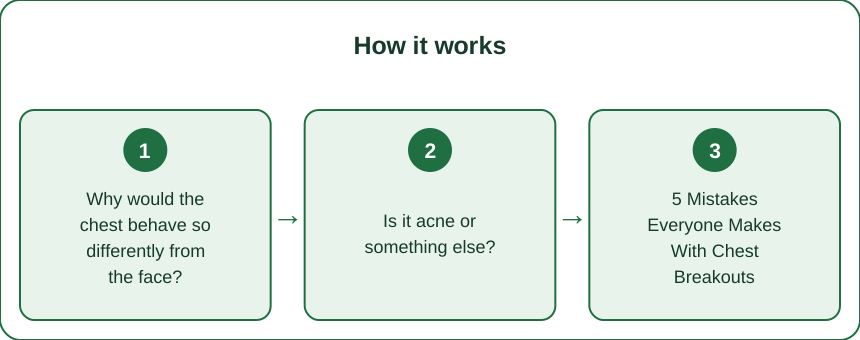
Why would the chest behave so differently from the face?
Airflow is the biggest difference. The face is exposed and sweat evaporates. The chest and upper back sit under two layers of fabric where sweat stays liquid against the skin for the whole session and often for the commute home.
Friction is constant there. Sports bra bands, seams, and straps rub with every step. Mechanical irritation of a follicle makes it far more likely to become inflamed.
Follicles are structurally different on the body. Chest and back follicles are larger and the surrounding skin is thicker, which changes how blockages behave and why they can look deeper and take longer to settle.
Product transfer lands there too. Conditioner rinsed from long hair runs down the neck, upper back and chest. This is a genuinely common and frequently missed cause of a very specific band of spots along the upper back and shoulders.
Is it acne or something else?
Uniform small bumps, each centred on a hair, often itchy — that pattern suggests folliculitis. It is inflammation or infection of the follicle and it responds to antibacterial washes and reduced occlusion rather than to acne treatments.
Mixed sizes with blackheads and deeper cysts is more likely acne. That responds to the usual acne actives.
Small, slightly scaly, evenly sized spots that resist antibiotics may be a yeast-driven folliculitis, which is more common in warm, humid conditions and in people who train frequently. It needs an antifungal rather than an antibacterial approach, which is why it is worth a professional opinion when things do not improve.
A heat rash looks different again — very small clear or red bumps appearing quickly in hot weather, often prickly. It settles once the skin cools.
If you cannot tell, that is a reasonable reason to ask a pharmacist or doctor. The treatments genuinely differ and the wrong one can drag on for months.
5 Mistakes Everyone Makes With Chest Breakouts
1. Treating it with facial products. Facial actives are formulated for facial skin and are often too gentle in concentration and too small in quantity for body use. A wash you can use over a whole area is more practical.
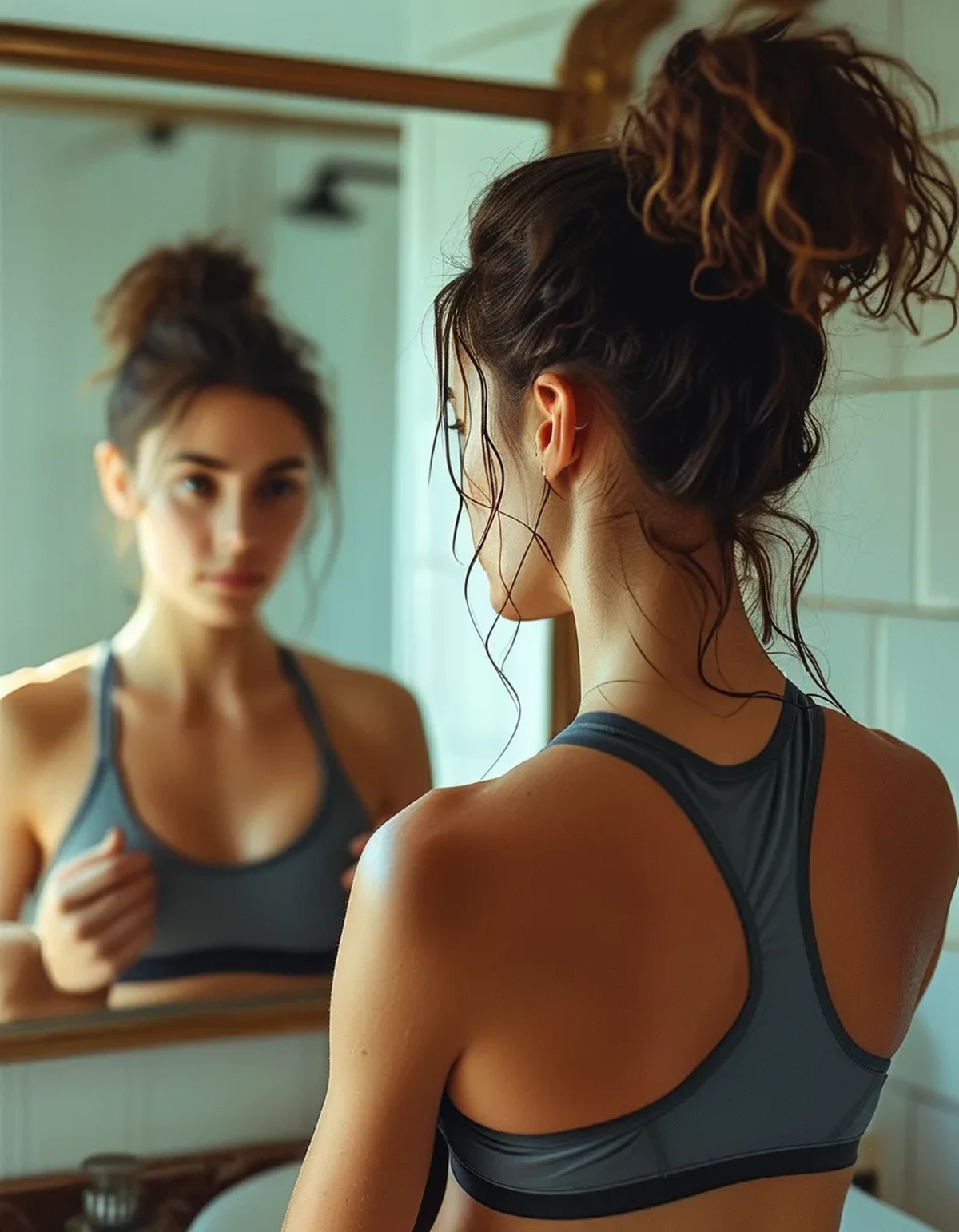
2. Staying in the sports bra after the session. The single highest-impact change is getting out of a damp bra within a few minutes of finishing. A dry top for the drive home does more than any serum.
3. Rinsing hair conditioner without rinsing the body afterwards. Rinse your back and chest last, after all hair products are out.
4. Scrubbing. Physical exfoliation on inflamed follicles increases irritation and can spread bacteria across the area. Chemical exfoliation, applied gently, is the better route.
5. Washing the bra too rarely, or with too much softener. Fabric softener coats technical fabric and traps residue and bacteria. Sports bras need washing after every session and no softener at all.
What actually helps?
Change out of damp kit fast. If a shower is not possible, a dry top and a wipe over the area is a large improvement over doing nothing.
A salicylic acid or benzoyl peroxide body wash, used a few times a week, addresses both blockage and bacteria. Benzoyl peroxide bleaches fabric, so use white towels and rinse thoroughly.
Look at the bra itself. Thick padded bands hold moisture; a lighter, more breathable band in a well-ventilated cut reduces the occlusion that drives the whole problem.
Loose fabric over the chest between sets rather than a tight technical layer under a tight top.
Give it eight to twelve weeks. Body skin turns over more slowly than facial skin and marks fade slowly. Judging a routine after two weeks is the main reason people abandon one that was working.
FAQ: Chest and Neck Breakout Questions, Answered
Does sweat itself cause spots?
Sweat alone does not, but sweat trapped under fabric alters the skin surface and encourages bacterial and yeast overgrowth. The occlusion is the problem, not the sweat.
Should I stop wearing a sports bra?
No. Support matters, and going without causes different problems. Change the material and the fit, and change out of it promptly.
When should I see a doctor?
If spots are painful, deep, leaving scars, or have not improved after around three months of consistent care. Recurrent folliculitis that keeps returning after treatment also warrants a proper diagnosis.
TL;DR:
- Chest and neck breakouts are usually friction plus occlusion, not a skincare failure.
- Many are folliculitis rather than acne, and the treatments are different.
- Get out of a damp sports bra within minutes — the highest-impact single change.
- Rinse hair conditioner off the body last, and skip fabric softener on technical kit.
- Give any routine eight to twelve weeks before judging it.
If your face is clear, the answer is on your skin, not in your cabinet.
This is general information, not medical advice.
See It in Motion
Seen here: UPF 50+ Racerback Yoga Tank Top — shop it on bubblelime.com
Keep Reading
This article is for general informational and styling purposes only. Fit, sizing, and product availability may vary.