Why Your Skin Reacts More to Training Once the Heating Comes On
Quick Answer: Indoor heating drops humidity substantially, which impairs the skin barrier - and a compromised barrier reacts more to everything training involves: sweat, friction, hot showers, and temperature swings. The fixes are barrier-focused rather than treatment-focused: shorter cooler showers, a gentler cleanser, moisturising within a minute of towelling off, and letting skin acclimatise before going out into cold air.
The post-workout flush that faded in ten minutes all summer now lingers for an hour. Your face feels tight walking out of the changing room. And you have a breakout along the jaw that you have not had since you were nineteen.

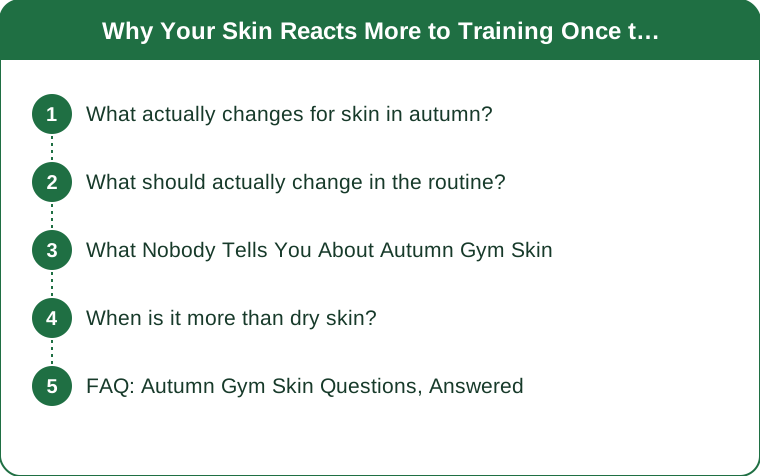
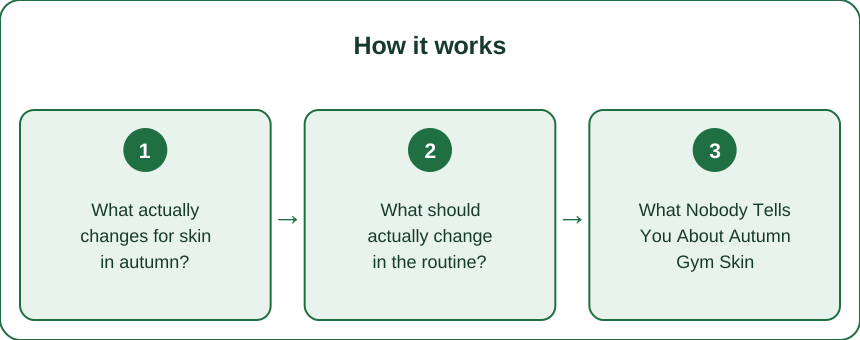
What actually changes for skin in autumn?
The environment on both sides of the workout.
Indoor humidity falls sharply once heating starts. Heated air holds a lower relative humidity, and the difference between a heated gym in October and the same room in August is substantial. Skin loses water to dry air faster than it can replace it.
The temperature swing at the door is new. Walking from a warm gym into cold outdoor air causes rapid vasoconstriction after exercise-induced vasodilation, and that swing is a genuine stress for skin - particularly for anyone prone to redness or rosacea.
Showers get hotter. People take hotter, longer showers in cold weather, and hot water strips surface lipids efficiently. Post-workout showers are already frequent; making them hotter compounds the effect.
Sweat sits on skin longer in some ways and evaporates faster in others. In dry air, sweat evaporates quickly, leaving behind salts and minerals that can irritate a compromised barrier - which is why some people notice more stinging in autumn despite sweating less.
Clothing changes. Heavier layers, more coverage, and hats and hoods create friction and occlusion in places that were uncovered in summer - the jawline under a scarf, the forehead under a hat, the back under thicker layers. This is the most common explanation for a breakout appearing somewhere new.
And barrier repair slows in cold and dry conditions, so the same minor irritation takes longer to settle than it did in August. That is the underlying reason everything seems to linger.
What should actually change in the routine?
Less than people expect, and specifically not more active ingredients.
Shorten and cool the shower. This is the highest-impact change and it costs nothing. Warm rather than hot, and as short as practical. Hot water feels wonderful after a cold walk and it is one of the most reliable causes of autumn skin tightness.
Switch to a gentler cleanser. A foaming or strongly cleansing wash that suited humid summer skin is usually too stripping now. Cream or gel cleansers formulated for a compromised barrier work better. Cleanse the face properly once, not repeatedly.
Moisturise within a minute of towelling off. Applying to damp skin traps considerably more water than applying to fully dry skin, and this timing detail matters more than the product choice. Do it for the body too, not just the face.
Rinse sweat off promptly where you can. Sweat left to dry on skin leaves salts that irritate, particularly around the hairline and jaw. If a shower is not possible, a rinse or a gentle wipe is meaningfully better than nothing.
Pause on actives when the barrier is struggling. Retinoids, strong acids, and physical exfoliants all become more irritating when the barrier is compromised. Reducing frequency for two or three weeks while the barrier recovers is a better strategy than continuing and treating the resulting irritation.
Let skin acclimatise before the door. Spending a few minutes cooling down indoors before stepping into cold air reduces the severity of the temperature swing, and it is the easiest change to make.
And keep sunscreen in the routine. UVA is present year round and penetrates cloud and glass, and outdoor autumn training still involves meaningful exposure.

What Nobody Tells You About Autumn Gym Skin
The breakout is usually friction and occlusion, not hormones. Acne mechanica - breakouts caused by pressure, friction, heat, and occlusion - appears exactly where new autumn clothing sits. Chin and jaw under a scarf, forehead under a hat band, back and shoulders under heavier layers and a backpack. Recognising it as mechanical points to the actual fix: wash the fabric, reduce the friction, and rinse the area after training.
Wash your hats and headbands. A sweat-soaked headband worn several times a week and never washed is a straightforward cause of forehead and hairline breakouts, and almost nobody thinks of it.
Your phone is worse in autumn. More time indoors, more screen time, and a phone that goes from gym floor to face. It is a genuine contributor to jawline breakouts and it takes five seconds to wipe.
Post-workout redness lasting longer is usually barrier-related, not a new sensitivity. Exercise-induced flushing is normal and resolves as circulation normalises; a compromised barrier makes the skin more reactive and slower to settle.
Body skin needs the same attention as facial skin and rarely gets it. Tightness and itching on arms and legs after showering is extremely common in autumn, and the same principle applies - shorter cooler showers, moisturiser on damp skin.
Hard water makes everything worse and is more noticeable in winter because you are showering more and hotter. It leaves a residue that contributes to dryness and irritation.
And the thing that surprises people: the gym’s air itself may be the driest environment you spend time in, because commercial ventilation and heating combine to produce very low humidity. Two hours a week in that environment while already dry is a meaningful exposure.
When is it more than dry skin?
Some autumn skin change warrants proper attention rather than routine adjustment.
Worth seeing a pharmacist or GP: persistent redness that does not settle, skin that cracks or bleeds, intense itching that disturbs sleep, any rash that spreads or does not respond to basic barrier care within a few weeks, and any new lesion that changes.
Rosacea often flares in autumn, driven by temperature swings, hot showers, and exercise-induced flushing. If facial redness is persistent rather than transient, involves visible vessels, or comes with a burning sensation, it is worth discussing rather than managing as dryness - it responds well to specific treatment.
Eczema commonly worsens in cold dry weather and is not the same problem as general dryness. Persistent itchy, inflamed, or weeping patches need proper treatment rather than a richer moisturiser.
Body acne that is painful, deep, or scarring should be assessed rather than treated with washing alone.
And fungal infections spread in gym environments - athlete’s foot, and fungal folliculitis which can look like acne on the back and chest. If body breakouts are itchy and uniform in appearance, that is a different problem from acne and needs different treatment.
The general principle: barrier care for two to three weeks is a reasonable first response to dryness and mild irritation. Anything painful, spreading, persistent, or worsening deserves an actual assessment.
This is general information, not medical advice.
FAQ: Autumn Gym Skin Questions, Answered
Why is my skin more irritated after workouts in autumn?
Indoor heating lowers humidity substantially, which impairs the skin barrier, and a compromised barrier reacts more to sweat, friction, hot water, and temperature swings. The training has not changed; the environment on both sides of it has.
Why am I breaking out along my jaw and forehead now?
Almost always friction and occlusion from autumn clothing - scarves, hat bands, hoods, and heavier layers. Acne mechanica appears exactly where pressure, heat, and fabric meet skin. Wash the fabric regularly, reduce the friction where possible, and rinse the area after training.
Should I stop using retinol or acids in winter?
Reduce rather than stop. Both become more irritating when the barrier is compromised by dry air, so lowering frequency for two or three weeks while you focus on barrier repair usually resolves the irritation without losing months of adaptation. Buffering with moisturiser first also helps.
Are hot showers bad for skin after the gym?
Hot water strips surface lipids efficiently, and post-workout showers are already frequent, so making them hotter and longer in cold weather is a common cause of tightness and irritation. Warm rather than hot, kept short, and moisturiser applied within a minute of towelling off makes a noticeable difference.
Why does post-workout redness last longer now?
Exercise-induced flushing is normal and resolves as circulation normalises, but a barrier compromised by dry air is more reactive and slower to settle. Cooling down indoors before stepping into cold air also reduces the severity of the vasoconstriction that follows. Persistent redness with visible vessels or burning is worth discussing with a GP.
TL;DR:
- Heating drops humidity, the barrier suffers, and a weakened barrier reacts more to sweat, friction, and heat.
- Shorter cooler showers plus moisturiser on damp skin is the highest-impact change and costs nothing.
- New breakouts along the jaw and forehead are usually friction from scarves, hats, and hoods.
- Reduce actives for two or three weeks rather than stopping - and wash your headbands.
- Cool down indoors before hitting cold air; the swing is a real stress, especially with rosacea.
The workouts are the same. The room is drier, the shower is hotter, and there is now fabric on your face.
Keep Reading
This article is for general informational and styling purposes only. Fit, sizing, and product availability may vary.